

Key Takeaways
- The internal bra technique is intended to provide additional internal support to breast tissue during procedures such as augmentation, reduction, or lift.
- Materials sometimes used in this technique include surgical mesh, absorbable scaffolds, or surgical sutures, selected based on individual surgical planning.
- This approach may be considered for patients who are in good overall health, have suitable breast tissue, and whose goals align with the potential benefits and limitations of the procedure.
- Published studies have examined the possible role of this technique in supporting implants or breast tissue; individual results vary and depend on multiple factors.
- Post-operative care, including pain management, activity restrictions, and follow-up appointments, is an important part of recovery and monitoring progress.
The term ‘internal bra technique’ is sometimes used to describe a surgical approach that provides internal support during certain breast procedures. Surgical approaches to breast procedures continue to evolve as new materials and methods are introduced. As breast augmentation surgery evolves, so do the techniques. At Gold Coast Plastic Surgery, we are committed to maintaining up-to-date knowledge of evidence-based techniques to support safe and effective patient care.
In this blog, we’ll cover what the internal bra technique is, how it works, and who may be a suitable candidate. This information is provided to explain how this surgical approach may be used in breast procedures such as augmentation, reduction, or lift, and to support informed discussion during consultation.
What is an Internal Bra?
The “internal bra” refers to a surgical technique sometimes used during breast procedures to provide additional internal reinforcement for breast tissue. In contrast to approaches that use implants alone, this method may involve the placement of a supportive framework within the breast using surgical mesh or other biocompatible materials. This framework functions as an internal scaffold designed to reinforce tissue structure and assist in maintaining support over time.
How Does the Internal Bra Work:
The internal bra procedure typically begins with the surgeon making incisions in locations appropriate to the surgical plan, often in combination with other breast procedures such as reduction, augmentation, or lift.
Once the incisions are made, pockets are created within the breast tissue to accommodate the selected supportive materials. These materials — such as surgical sutures or absorbable scaffolds — are placed within these pockets to reinforce internal tissue structure.
The implants, when used, are secured with surgical sutures to support their position within the breast.
During recovery, the internal framework is intended to provide additional internal reinforcement as healing occurs, with supportive sutures gradually integrating into surrounding tissue over time.
Materials Used:
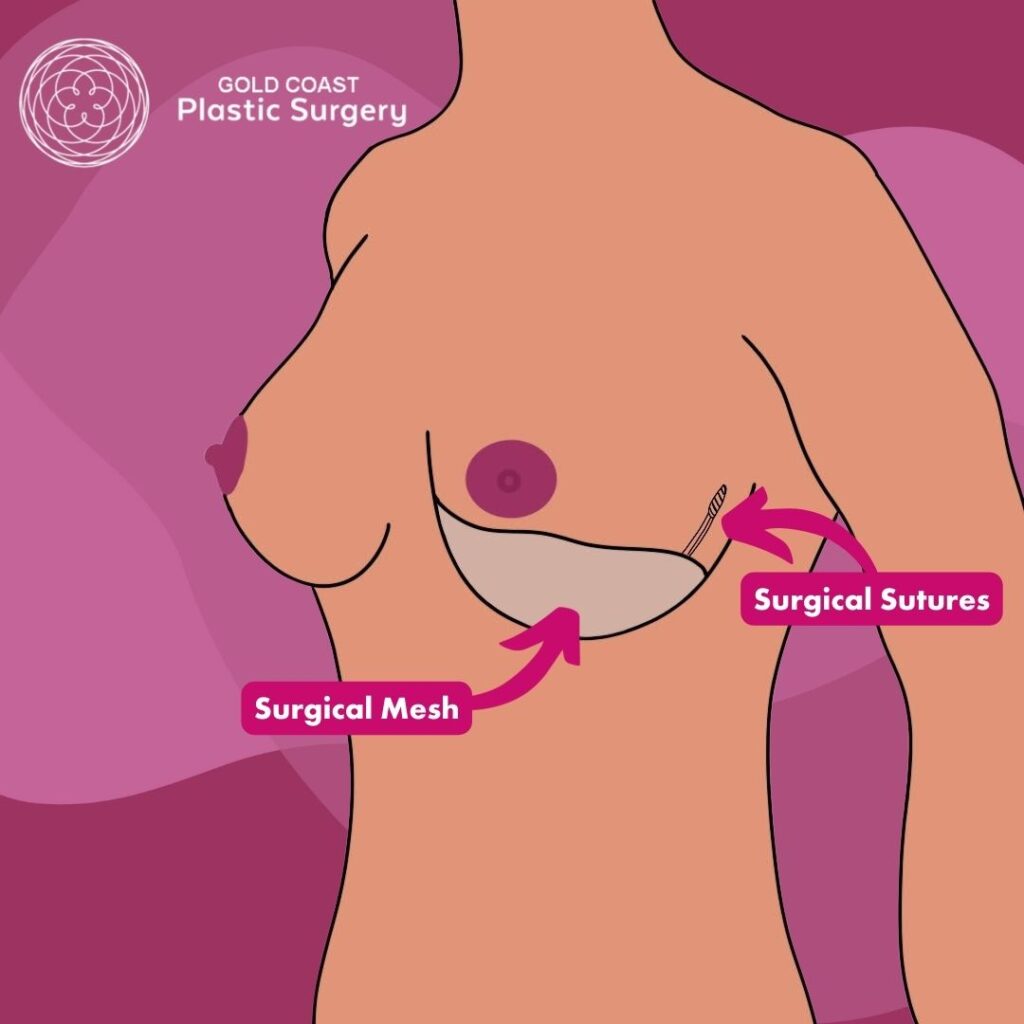
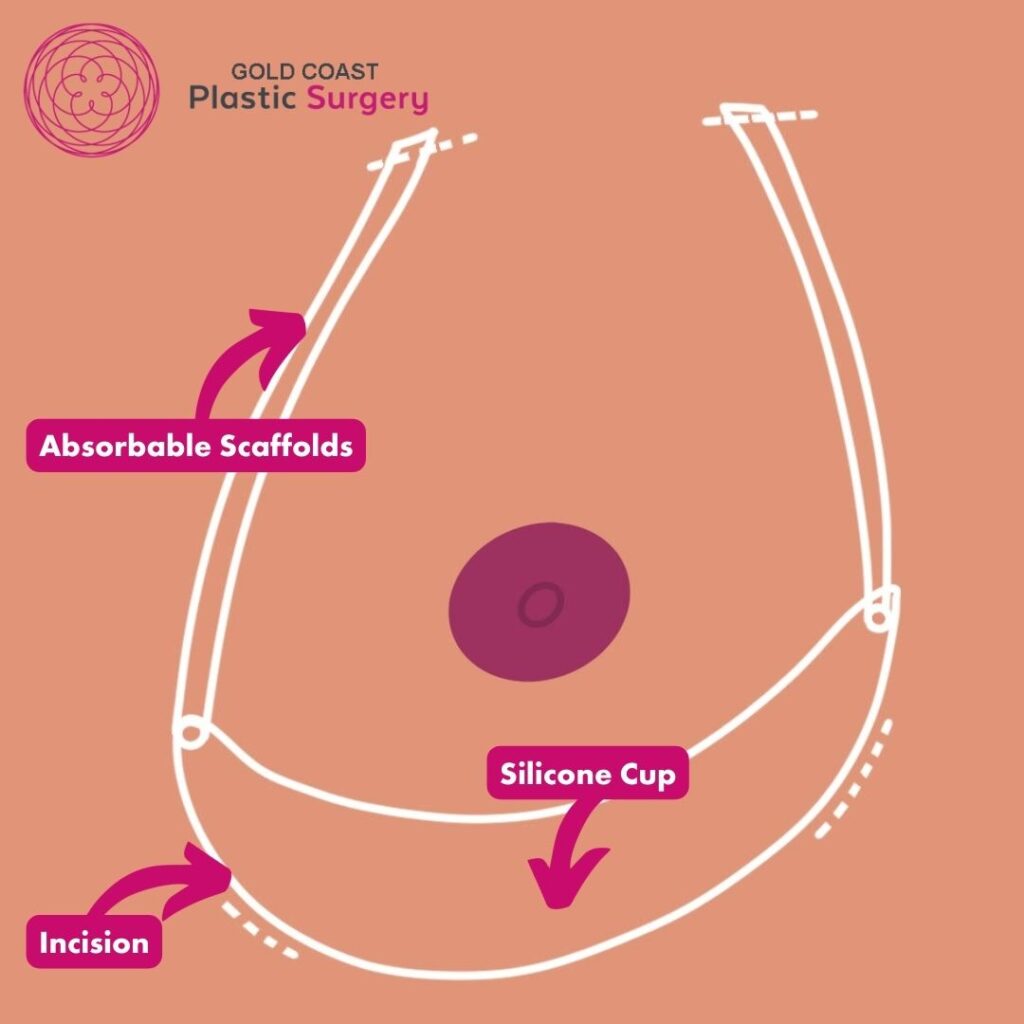
The materials used in the internal bra technique may vary depending on the surgeon’s assessment, the individual’s anatomy, and the surgical plan. Common options include:
Surgical Mesh: A biocompatible material that may be used to reinforce internal breast tissue and support healing.
Absorbable Scaffolds: Composed of materials that gradually dissolve over time and are absorbed by the body as healing progresses.
Surgical Sutures: These may be used as part of the internal support technique to help maintain implant positioning and provide reinforcement during recovery.
The choice of material is made according to the surgeon’s clinical judgement and the needs of the individual procedure.
These materials are selected based on their biocompatibility, strength, and ability to integrate with the surrounding tissue, supporting tissue healing and alignment with recognised surgical safety standards.
Ideal Candidates for the Internal Bra Technique
The internal bra technique may be suitable for individuals who:
- Are seeking a procedure that includes internal support of breast tissue as part of their surgical plan.
- Have realistic expectations regarding the outcomes of the procedure.
- Are in good overall health and do not have medical conditions that could increase the risk of complications during surgery.
- Do not smoke or are willing to quit smoking before and after the procedure to promote optimal healing.
- Have sufficient breast tissue to support the internal bra materials.
- Are committed to following post-operative care instructions provided by their surgeon.
Internal Bra Procedure
The internal support procedure involves several surgical steps designed to reinforce internal breast tissue. Below is an overview of the general process:
Anesthesia and Incisions
Under general anaesthesia, incisions are made in locations appropriate to the surgical plan, such as along the inframammary fold or around the areola. Incision placement is discussed during consultation as part of the planning process.
Pocket Creation and Placement of Internal Bra
At Gold Coast Plastic Surgery, Dr Mark Doyle uses surgical methods consistent with recognised standards to create pockets within the breast tissue. These pockets are designed to accommodate the chosen supportive technique, which may include implants or internal suturing.
Based on each individual’s anatomy and surgical plan, barbed sutures may be used to reinforce internal support. The framework is intended to remain in place within the breast tissue to provide internal reinforcement during healing.
Suturing and Closure
Once the supportive materials are positioned, the surgeon secures them using sutures to maintain internal reinforcement. The incisions are then closed using sutures or surgical adhesive to support healing.
The Internal Bra Technique in Breast Shaping
Breast Augmentation Surgery with Internal Bra
- Breast Augmentation Surgery with Internal Support: The internal support technique may be incorporated into breast augmentation procedures to reinforce the internal breast structure and assist with implant positioning during recovery.
- Internal Support for Implants: The internal support framework is designed to assist in maintaining implant placement within the breast pocket as tissues heal. This additional reinforcement is used according to the surgeon’s clinical judgement and the individual surgical plan.
- Tissue Reinforcement: The technique may also be used to support surrounding breast tissue following implant placement. The specific materials and approach vary depending on anatomy and procedural goals discussed during consultation.
- Surgical Planning: Internal support methods are selected to align with the intended surgical contour, acknowledging that outcomes vary between individuals due to anatomy, tissue quality, and healing factors.
- Revision Considerations: All surgical procedures carry a possibility of revision. The use of internal support does not eliminate this risk but may be discussed as part of an overall plan to reinforce tissue during recovery.
Breast Reduction Surgery with Internal Bra
- Added Internal Support: The internal support technique may be used in conjunction with breast reduction surgery to reinforce breast tissue internally. This additional reinforcement is designed to help support tissue positioning during recovery. The approach is tailored to the individual’s anatomy and surgical plan, and its use is determined by the surgeon’s clinical judgement.
- Healing and Recovery Considerations: By providing internal reinforcement, the technique is intended to assist with tissue stability as healing progresses. Recovery experiences and outcomes vary depending on individual factors such as overall health, tissue quality, and adherence to post-operative care instructions.
Breast Lift Surgery with Internal Bra
- Internal Support in Breast Lift Surgery: Breast ptosis refers to the natural descent of breast tissue over time, which may be addressed through surgical techniques such as a breast lift. The internal support technique can be incorporated into this procedure to reinforce breast tissue internally as part of the surgical plan. This method is intended to provide internal reinforcement during recovery and to support tissue positioning following surgery. The approach used varies depending on each individual’s anatomy, tissue quality, and surgical goals. Outcomes differ between individuals and depend on healing responses and the details of the surgical plan.
Internal Bra Recovery Process
Recovery Following Internal Support Procedures
Following internal support breast surgery, it’s important to prioritise your recovery to support safe healing and comfort.
Immediate Post-Operative Care
Some discomfort, swelling, and bruising are expected. Your surgeon may prescribe pain medication and recommend wearing a supportive surgical garment.
Rest and Recovery
Allow time for rest and avoid strenuous activities. Follow your surgeon’s post-operative instructions carefully to support recovery and minimise strain on the surgical area.
Monitoring and Communication
Contact your surgeon if you notice any changes or have concerns, and attend all scheduled follow-up appointments to monitor your recovery progress.
Gradual Return to Activity
Resume activities gradually, following your surgeon’s guidance. Avoid movements that place pressure on the chest until advised otherwise.
Long-Term Follow-Up
Breast reduction and breast lift procedures generally involve more extensive tissue manipulation than augmentation, so recovery times may differ. Regular review appointments help your surgeon assess healing and address any ongoing concerns.
FAQs
Why are my breasts (boobs) so far apart?
The distance between breasts, often referred to as wide set can be influenced by various factors such as genetics, breast tissue distribution, and skeletal structure. In some cases, it’s entirely normal for breasts to have a wider gap between them, while in others, it may be attributed to specific anatomical characteristics.
Depending on individual preferences and medical considerations, there are options available to address the appearance of wide set boobs (breasts). Surgical interventions such as breast augmentation or breast lift procedures may be considered to address breast asymmetry and improve breast placement. However, it’s important to consult with a qualified plastic surgeon to determine the most suitable approach based on your unique anatomy and aesthetic goals.
Are there any side effects associated with the internal bra technique?
Like any surgical procedure, the internal support technique may carry potential risks and side effects. These can include temporary discomfort, swelling, bruising, or changes in nipple sensation in the period following surgery.
Your surgeon will discuss these potential risks during consultation and explain how recovery and follow-up care are managed to support safe healing.
Contact Us
Contact Gold Coast Plastic Surgery today for cosmetic and reconstructive procedures on the Gold Coast and Brisbane areas. Our experienced team is dedicated to providing personalised care for your surgery journey.
About Dr Mark Doyle FRACS (Plas) – Queensland Plastic Surgeon
Servicing patients in Gold Coast, Brisbane, Sunshine Coast, Cairns and New South Wales NSW – Northern Rivers, Byron Bay, Ballina, Lismore and more.
Dr Mark Doyle is a fully qualified Specialist Plastic Surgeon with over 30 years of experience performing breast, body, face and nose surgery. He has completed all required training and only carries out approved surgical practices. There are NO undertrained doctors or cosmetic doctors acting as surgeons at Gold Coast Plastic Surgery.