
The nasal septum is the internal wall that separates the two nostrils, and when it is misaligned, airflow through the nose can become restricted. This may lead to ongoing nasal blockage or breathing difficulty.
For patients across the Gold Coast and Brisbane, septoplasty may be recommended following assessment by Specialist Plastic Surgeon Dr Mark Doyle. This procedure is performed for functional reasons, with the aim of improving nasal airflow and breathing.
What Is a Deviated Septum?
The nasal septum is the internal structure made of bone and cartilage that separates the left and right nasal passages. A deviated septum occurs when this structure is displaced to one side, narrowing one or both airways. This misalignment can restrict airflow and disrupt normal nasal function.
Common functional issues associated with a deviated septum include chronic nasal congestion, difficulty breathing through the nose, recurrent sinus infections, and snoring.
Septum Deviation Symptoms
Symptoms may vary in severity and can include persistent nasal blockage, frequent sinus infections, snoring, recurring nosebleeds, and facial pressure. Some people may also notice difficulty breathing during exercise or sleep.
A definitive diagnosis requires a physical examination of the nose, which is performed during a consultation with Dr Doyle or the treating surgeon.
What is Septoplasty?
Septoplasty surgery is used to straighten and reposition the nasal septum to establish a more open airway. This operation is performed entirely within the nose, meaning there are no visible external incisions in most cases. The primary goal is to improve airflow and nasal function, and it generally does not aim to significantly change the external appearance of the nose.
What Gold Coast Plastic Surgeon Dr Doyle Believes Is An Optimal Septoplasty Result
An optimal septoplasty result corrects your nasal airway obstruction. You should be able to breathe easily through your nose after the recovery. The cosmetic appearance of your nose shouldn’t change too much, but there may be some minor changes necessary to improve breathing. If you wish to see cosmetic changes, you may be recommended to combine nasal surgery for breathing with rhinoplasty. This is known as septorhinoplasty surgery.
Septorhinoplasty: Addressing Function and Form
Septorhinoplasty combines septoplasty with rhinoplasty. This approach may be recommended when a patient has functional breathing issues along with concerns about the external shape of the nose. In these cases, the procedure can address internal airway obstruction while also reshaping features such as a dorsal hump or nasal tip.
Suitability and Medicare Rebates
Suitability for septoplasty is assessed on an individual basis. Patients are typically in good general health, non-smokers, and have fully developed nasal structures. Septoplasty performed for functional impairment often attracts Medicare rebates and may be eligible for private health fund benefits when specific criteria are met. Relevant Medicare Item Numbers include 41671 or 41672. Eligibility is discussed during consultation.
Septoplasty Procedure and Recovery
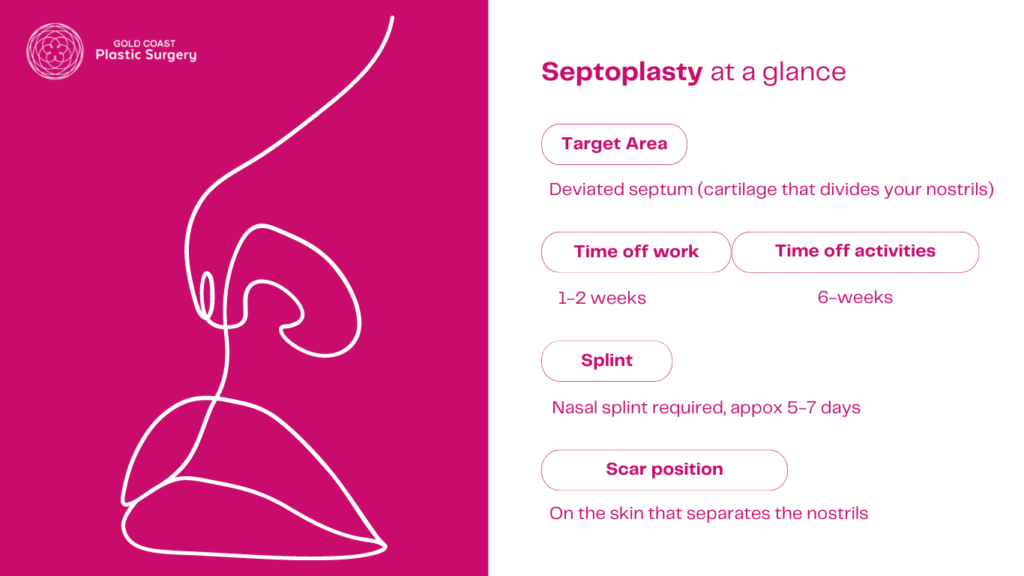
Septoplasty is performed under general anaesthesia and usually takes one to two hours. Recovery involves an initial period of swelling and congestion. Internal splints or packing may be used temporarily. Bruising and swelling typically reduce within two weeks, while strenuous activity should be avoided for approximately six weeks. Patients are advised to sleep with their head elevated and follow all post-operative instructions.
Scarring is minimal, as incisions are made inside the nose. In some cases, a small incision on the columella may be required and is generally discreet.
Risks and Complications
All surgery carries risks. Potential complications include bleeding, infection, septal perforation (a hole in the septum), and changes in nasal sensation. Adhering closely to pre- and post-operative instructions is an important part of recovery.
FAQs
How to Tell if You Have a Deviated Septum?
Deviated septum symptoms may include snoring, frequent nosebleeds or chronic sinus infections. If you have any of these symptoms, you can see Gold Coast Plastic Surgery Plastic Surgeon Dr Doyle or Consulting Ear, Nose or Throat Surgeon Dr Kleid for a diagnosis. They will likely perform a physical exam and order a CT scan.
You can also perform a deviated septum self-test to check if air passes through each nostril easily. To do this, hold your finger on one nostril and breathe through the other. If you feel a major difference in air pressure, you may have a deviated septum.
Are There Septoplasty Medicare Rebates?
Yes, deviated nasal septum surgery can attract Medicare rebates. If you have breathing difficulties or septum problems as a result of an injury, a previous rhinoplasty surgery, or birth defects, you may be eligible for a Medicare rebate. This rebate is available if you meet the criteria of item numbers 41671 or 41672 on the Medicare Benefits Schedule. Dr Doyle or Dr Kleid will be able to discuss this further during your initial consultation.
What to Expect After Septoplasty and Turbinate Reduction?
After nasal septum surgery and turbinate reduction surgery, you can expect some bruising and swelling around your eyes. The swelling and bruising usually goes down within two weeks. You may also have a splint in your nose, which will be removed after a week.
Will Septoplasty Leave Scars?
Yes, septoplasty surgery will leave a small incision scar on the columella, the tissue that separates both nostrils. As it is on the base of the nose it is generally not noticeable when the head is upright. And, with good scar management, the appearance of the scar should fade over 12 – 24 months.
Your Next Steps: Scheduling a Consultation
If you’re experiencing ongoing nasal breathing difficulties that may be related to a deviated septum, a clinical assessment can help determine whether septoplasty is appropriate.
To take the next step, a valid referral from your GP is required before a consultation can be scheduled. If your concerns include both breathing function and the appearance of the nose, additional consultation and consent requirements may apply.
Contact the clinic to arrange an appointment or to obtain further information about deviated septum surgery for patients on the Gold Coast or in Brisbane..
About Dr Mark Doyle FRACS (Plas) – Queensland Plastic Surgeon
Servicing patients in Gold Coast, Brisbane, Sunshine Coast, Cairns and New South Wales NSW – Northern Rivers, Byron Bay, Ballina, Lismore and more.
Dr Mark Doyle is a fully qualified Specialist Plastic Surgeon with over 30 years of experience performing breast, body, face and nose surgery. He has completed all required training and only carries out approved surgical practices. There are NO undertrained doctors or cosmetic doctors acting as surgeons at Gold Coast Plastic Surgery.